
Imam Maturidi: How Did a Samarkand Scholar's Ideas Reach the Balkans?
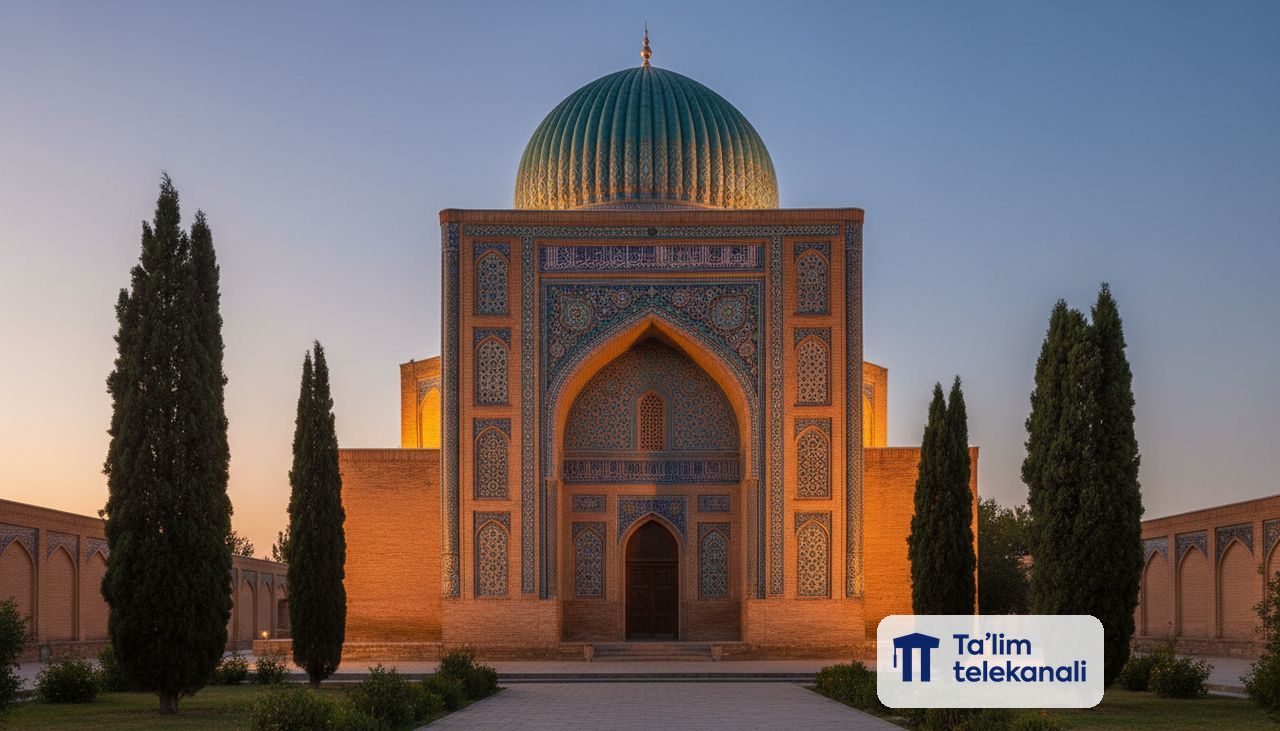
Image generated with AI
Today most Hanafis in Turkey, Central Asia, South Asia and the Balkans follow, in matters of creed, a scholar who lived in Samarkand. He is Imam Abu Mansur Maturidi, founder of one of the two main schools of creed in Sunni Islam.
Who he was
Maturidi was born around 870 in the village of Maturid near Samarkand (some Western sources give 853). His full name was Abu Mansur Muhammad ibn Muhammad ibn Mahmud al-Maturidi as-Samarqandi. He studied in the Samarkand Hanafi school under Abu Bakr Juzjani and Abu Nasr Iyadi. He worked in kalam, fiqh and tafsir. He died in Samarkand in 944. He is known by the titles “Imam al-Huda” and “Alam al-Huda”.
What he did
His main work is “Kitab at-Tawhid”. It explains questions of belief through reason and evidence, and is the first source of the Maturidi school. Another key work is “Ta'wilat al-Qur'an” (“Ta'wilat ahl as-sunna”), which interprets verses with rational arguments. Scholars think it may have been compiled by his students from his lessons.
The core of his method is simple: do not set revelation and reason against each other. Thinking with reason strengthens belief. It is like an engineer testing a bridge's strength before opening it.
Impact on the world
Maturidism was the official creed school first in Transoxiana, then in the Ottoman Empire and the Timurid-Babur state of the Baburids. Today Hanafis in Turkey, Central Asia, South Asia and the Balkans mostly follow this school.
Why it matters today
His method of testing knowledge with reason and evidence is still a model of critical thinking. Interest in his legacy keeps growing:
- On 17 November 2000, his 1130th anniversary was marked, with an international scholarly conference in Samarkand.
- On 3–5 March 2020, a conference for the 1150th anniversary gathered over a hundred scholars, including Al-Azhar's Sheikh Ahmad at-Tayyib.
- The Imam Maturidi International Research Center in Samarkand has published scholarly texts and Uzbek translations of both major works and launched the journal “Moturidiylik”.
- In 2025, the 1155th anniversary of his birth is being celebrated.
Visiting
His tomb is in the Chokardiza cemetery in Samarkand, an ancient burial ground of nearly 20 hectares where many scholars lie. The mausoleum was restored in 2000. Now the complex is being rebuilt on 10.2 hectares, with a mosque, library and museum.
Sources
