Stay informed with the latest news
Subscribe to our Telegram channel

1. A miniature circular book (1480)
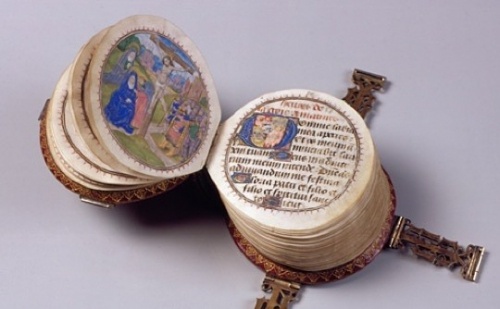
If any little book is a work of art, then a little book in the shape of a circle is a real masterpiece. This unique specimen of the Codex Rotundus was made by hand, circa 1480. It was a Christian book, the Breviary, a popular medieval book in French and Latin. Although the diameter of the book did not exceed 9 centimeters, it consisted of 266 pages. The stem is only 3 centimeters long, so it is secured by three locks made in a monogram using the letters of the Gothic alphabet.
The creator of the Codex Rotundus - an unknown illustrator from Bruges, Belgium - not only beautifully placed the text of the book in circular pages, but also drew 30 unusual capital letters.
2. Waistbook (1589)
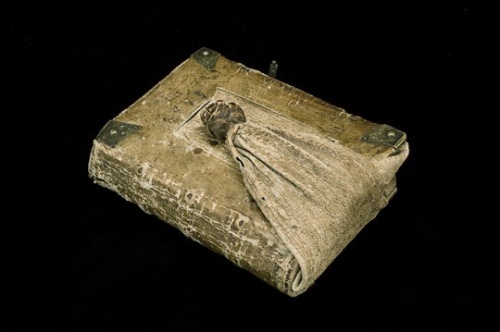
This book was a small volume that could be attached to a belt or belt. The knot, which was part of the leather cover in the book, served to hold it on the waist. The book hangs "from the sky." The owner will be able to read it at any time.
Waistbooks were widespread in Germany and the Netherlands between 1400 and 1550. This book was written in 1508. In 1589, it was covered with an outer leather cover with a hanger, so that it could be worn around the waist.
3. Two-sided book
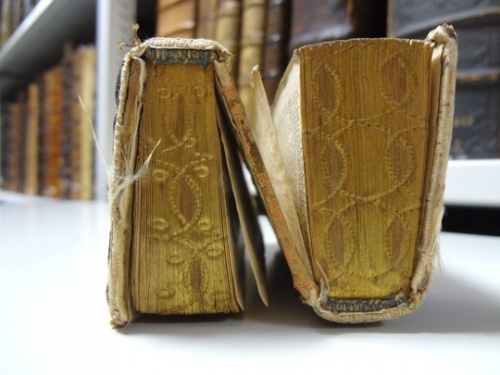
In the 16th and 17th centuries, books were created using a special sewing technique called "dozado" (dos-a-dos). Erik Quakkel calls them "Siamese twins." That's the right name. The books have two front faces and one back. Dosado was used to combine two complementary books. For example, the New Testament (fragments of the Bible) and the Old Testament.
4. A book that can be read in 6 ways (XVI century)
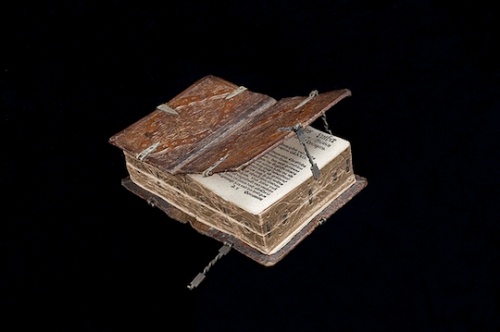
This unique book embodies another version of the dozató sewing technique. Its uniqueness lies in the fact that the book can be opened and read in 6 different ways. In other words, the volume consists of 6 different books, each of which has a separate connection and is hidden within a common connection with its mandals.
The book was published in Germany. This consists of religious texts and brief Biblical comments, including Martin Luther's book The Brief catechism. The book is in the collection of the Rogge Library in Strengnes, Sweden.
5. A children's book with handles (XVII century)
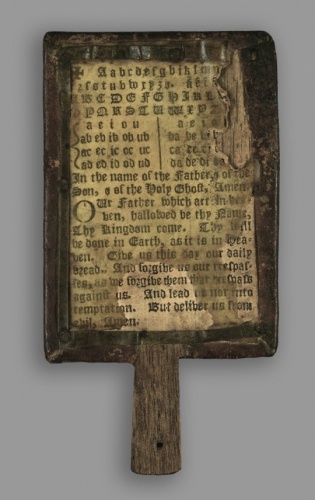
This unique and unique book is called the "horn book." Such books had an alphabet and several simple short texts to develop reading skills. Books were harder than they are today. That's why their hand was designed to help move easily - the boy could easily lift the alphabet with one hand right in front of his eyes. Why "horn book"? Such books are prepared taking into account their constant use. Books were printed on paper and covered with a thin layer of horn. If such a book were to fall out of hand, it would do little harm.
6. Electric current and compressed air book (1949)
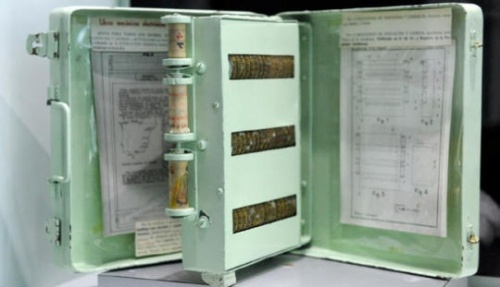
The "Enciclopedia Mecánica" ("Encyclopedia of Mechanics") is the "father" of electronic books. The book "Mechanics, Electricity, and Powered by Compressed Water" was patented in 1949 by Spanish writer and teacher Angela Ruiz Robles.
The book had the ability to read parts in an enlarged format. The inventor intended to add a light bulb, a calculator, and a sound for reading later. The only copy of the book is kept in the National Museum of Natural Science and Technology of La Coruña.
7. Paperback book access to the Internet (2010)
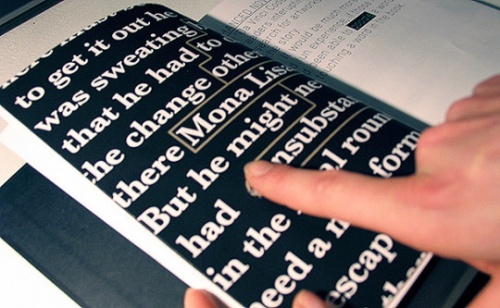
The abbreviation "Blink" originates from the words "book+link" ("book+link"). The secret of the book, created by Manolis Kelaydis of the Royal School of Art in London, is that some parts of the text are printed with guiding ink that forms a link or button. When you touch a keyword, a signal will be sent to the circuit, and the book will be sent to a computer located nearby and connected to a Bluetooth module. In this way, one can find the meaning of the desired word or article on Wikipedia.
8. Large format book (2010)
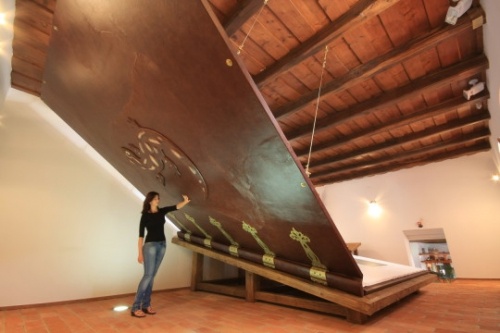
The book you are looking at is more than 4 meters high, 7 meters wide in its open state, and weighs 1,452 kg. Made in Hungary by Bela Varga and Gabor Varga, it was included in the Guinness Book of World Records as the world's largest book in May 2010. Its 346 pages were printed on a large-format printer designed to make advertising billboards.
9. A book with threaded hyperlinks (2010)
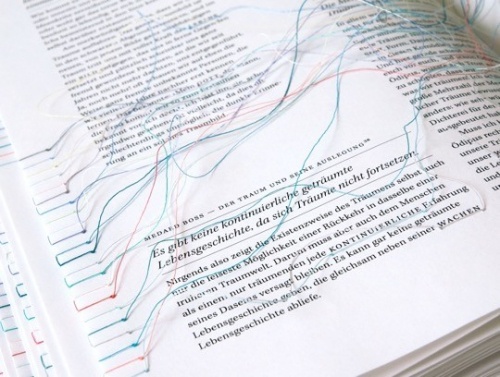
This remarkable book was prepared by Maria Fischer as a thesis at the University of Augsburg. "Traumgedanken" ("Thoughts in Dreams") consists of a collection of scientific, philosophical, and poetic texts connected to each other in an orderly manner. This book, created in the era of digital technologies, not only expresses the logic of dreams, but also reflects the material metaphor of the Internet.
10. A Self-Burned Book (2013)
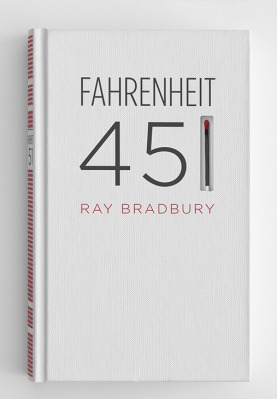
This peculiar idea could only be applied to one peculiar book - "451 degrees Fahrenheit." On the cover of the book, instead of a number in his name, there is a match. The "spine" of the book is made in the form of a matchbox scraper. So you can burn the book. The idea was conceived by student Elizabeth Perez while working at the design studio of the Austin Creative Department School.
Whether it is strange or simple, books lead us to the light. Therefore, do not stop studying at any time and under any circumstances.
Collector Ma'mura Turaeva
#Article